| Breath - Donna Jo Napoli |
Medieval Europe + Plagues + Mystery (and maybe a little bit of Magic) = Awesome.
It did not disappoint, and my inner history nerd was sated.
More than that, I found myself delaying the completion of the book, as I was not yet ready to leave the strange, enchanting and dark world into which I had been so easily drawn.
But let me back up a little before I go all histo-lit-geek on you
(Lib of Alexandria 4-eva, son!)
Brief Synopsis:
The protagonist of the story is Salz, a young boy in medieval Hameln. He lives outside of town with his father and brothers, as well as his grandmother. Salz is a special boy - he lives with a mysterious illness that sends him into violent and uncontrollable coughing fits, forcing him to stand on his hands for long periods of time in order to subdue them.
The familial relationships between Salz and both his brothers and father range from indifference to deep-seated hatred (one brother holds him responsible for their mother's death). Due to his illness, he's doesn't have much to bring to the table in the way of manual labor, leading to further resentment/indifference.
Salz and his grandmother, however, have a very close relationship and spend their days basically inseparable, scouring the land for herbs and other necessary ingredients, making potions with said ingredients, and participating in a Christian Coven (I had no idea there were such things). His grandmother and her Coven are actually very well-respected within their community and there is no fear or superstition associated with the group.
Until bad things start to happen to the folks in Hameln...
Suddenly people are afflicted by a mysterious malady that seems to make them go mad. Throw in some homemade beer, a rapidly-growing body count and a sudden rat infestation and you've got the perfect storm for a good old fashioned witch hunt...
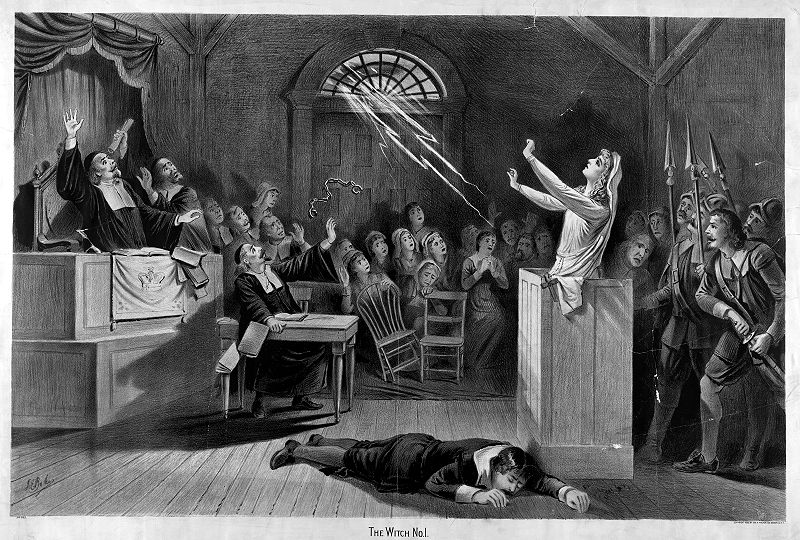 |
| ...But it's a Christian Coven! Doesn't that count for something?!? |
 |
| Seriously? We're the only nasty thing you've touched today?!? |
I'll avoid spoilers here, but I was very impressed with how the author wove together historical places and settings with fictional characters as well as a classic fairy tale (the story evolves into a dark depiction of the "Pied Piper" tale).
The brief Afterword was also a nice touch, providing modern revelations on the story's key mysteries.
Napoli easily drew me in with her simple but engaging prose and descriptions that proved visceral and effective in creating an entire world that envelopes Salz - and the reader.
Salz is an unusual boy, but immediately likeable and relatable - particularly with young adults.
His family dynamics of dealing with resentful siblings and a dismissive father are certainly nothing our modern teens can't empathize with. His relationship with his grandmother provides a nice counterbalance to the dynamic and imbues Salz's life with a source of love and a sense of belonging.
Salz also faces some common coming-of-age scenarios: becoming a sort of "foster brother" to a young girl and gaining a sense of adult responsibility; facing death on a personal level; feeling conflicted between his faith in the coven and the distress he feels when they sacrifice a cow in a less-than-humane manner; and experiencing the first stirrings of his budding sexuality.
While I personally loved the book because it appealed to my personal tastes, I have to keep perspective and put my "teacher" hat on now:
Do I think that a lot of students would enjoy this book? Yes, I do.
Do I think that I could use it as the anchor for an entire unit? No, probably not.
Could I use this book at all in my instruction? Yeah, I think so.
It would be a very nice companion piece for a unit on creative writing. It would also be fantastic as a crossover tool if I were in a team teacher setting and we were teamed up with history!
Regardless, it would definitely go in my personal classroom library.
While the language is more complex and some of the situations fairly graphic and emotional, I think the book holds a wide appeal that can be appreciated across the board with its fast-paced plot, engrossing mysteries, likeable protagonist and rich storytelling. And a plague, which always makes things interesting.

I was really struggling of a way to use this book aside from just putting it in my classroom library, and I love the idea of using it alongside a creative writing unit - or using it in a team teaching situation. Perfect!
ReplyDeleteWere you satisfied with the background information provided about the Christian Coven (and that cracks me up - considering the direction modern Christianity has taken comparatively), or would you have liked more?
Hmmmm...that's actually a very good question that is making me stop to think. I was struck by the jarring concept of a "Christian Coven" but I honestly didn't think much more about it. Now that you mention it, I would be interested in doing some more research on this CC concept and seeing if it has roots in reality or if this was more fictitious. I doubt it, considering Napoli seems to interweave her characters with very real history. I guess it would have been neat if she had included more information on this idea in her "Afterword" section where she talks about the mold and the modern medical explanation for Salz's ailments. And yes, it is quite hilarious and ironical considering the views Christianity takes on witches and pagans and really anyone who doesn't seem to fit into their "mold."
Delete*struggling FOR a way...not of a way...geez.
ReplyDelete