Friday, June 28, 2013

S.E. Hinton's "The Outsiders" Still Stands Strong

I'm not sure what I was expecting from The Outsiders.  I hate to admit that I wasn't as blown away or thoroughly engaged as I thought - and hoped - I would be.  I think that this is due to a combination of things:  the book had been hyped up so much in my mind as a "must-read classic" and I had a very different idea of the plot from what it actually is,  I found the "lingo" of the times more distracting than engaging and, sadly, I think that in this day and age the situations in the book really don't seem that radical, shocking or graphic. 

All of that being said, there is no doubt in my mind that The Outsiders is an outstanding piece of literature and it is easy to see why it has stood the test of time and is still relevant over 40 years after it was written!  While it might not be my personal favorite book, I love this book for the simple fact that it was written at all and changed the face of YA Lit with a story that gave teens a real voice.  It's also undeniable how much of a powerful impact it has made - and continues to make - on people of all ages.

It is even more incredible and poignant that the author wrote the novel at the age of fifteen - and the author is a girl!  I think that both of these points give the novel even more weight and legitimacy.  Teenagers don't like phonies and they can see right through things that aren't genuine.  This book is undeniably the real deal in every way imaginable:  the issues the characters deal with, their way of thinking and viewing the world, the way they speak and express themselves, and their struggle to define themselves as individuals in a world that doesn't really let you be yourself.  Sound familiar?

This edition has some great extras included and provides an interview with S.E. Hinton and a helpful discussion guide for educators to use in their classrooms.  I was particularly moved by the forward to the novel, where S.E. Hinton humbly acknowledges the wide-reaching impact of the novel but takes very little credit for it:

"The letters saying "I loved the book" are good, the ones that say " I never liked to read before, and now I read all the time" are better, but the ones that say "The Outsiders changed my life" and "I read it fifteen years ago and I realize how much it has influenced my life choices" frankly scare me...A lot of the time I feel that The Outsiders was meant to be written, and I was chosen to write it.  it's certainly done more good than anything I could accomplish on a personal level."

And that, in essence, is the reason why I would answer "yes" to both including this novel in my personal classroom library and probably include it in my curriculum.  You really can't ask for a more perfect answer to the YA Lit prayer. 

Thursday, June 27, 2013

"The Hunger Games" (Warning: Some Snarkiness and Inappropriate Language Ensues)

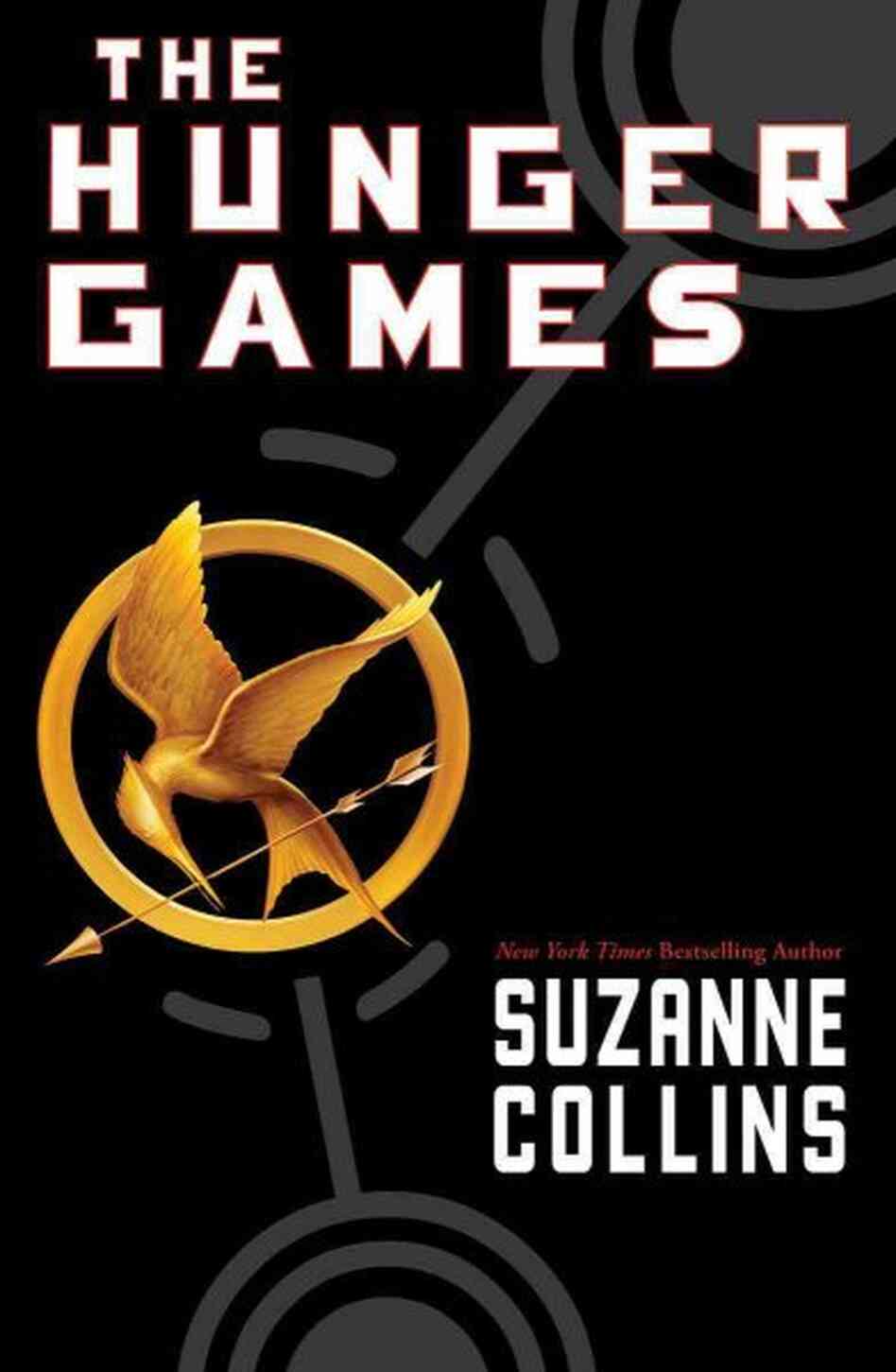
I tend to resist giving into "trendy" novels that inevitably end up as obnoxiously huge, mega-million-dollar blockbuster films (see: Harry Potter*, Twilight).  However, I did have a genuine interest in this trilogy but never got around to actually reading it.  Then the movie happened, and I sort of got turned off from further pursuing that endeavor.  So when the reading list for our summer lit class came out, I was pretty thrilled that the Hunger Games trilogy was included - now I would have the perfect opportunity to read the novel - and incentive for doing it in a timely fashion!

The Hunger Games is no James Joyce or William Faulkner novel, although I wasn't expecting it to be.  The writing is not super-deep or embedded with rich prose or riddled with thought-provoking literary devices.  There are not a lot of different thematic levels going on here or allusions to Shakespeare or the Bible.  Again, not expecting any of these things, but perhaps hoping it would provide a little more literary "meat" to chew on while reading.
Regardless, I was very pleasantly surprised by the overall quality of writing and the deeply engaging story.  Okay, full disclosure:  I couldn't put it down!  The pace, action, story concept and the truly intriguing heroine make it nearly irresistible!

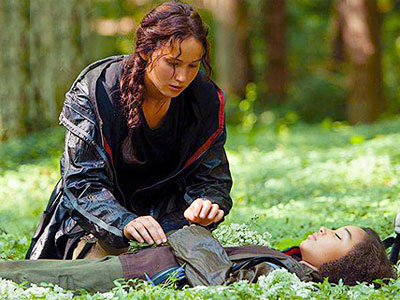
I don't think I really need to give a plot summary - it's pretty well-known by now, including  the "Girl on Fire" at the center of it all:  Katniss Everdeen, the young lady who takes her younger sister's place in the annual Hunger Games, is pitted against her fellow District 12-dweller (and potential love interest), and faced with the moral challenge of killing off 23 other young people as the only chance for her own survival - and that of her mother and younger sister.

As I noted earlier, I don't see this book as being raised into the upper echelons of "classic literature," for the writing, but I can fully get behind its literary merit and I can see why it's gained such wide appeal, especially amongst teens (and I would dare to say that it will become a continued staple in teen literature for years to come).  I would definitely have this in my personal classroom library and I would even go so far as to include it in my yearly curriculum.

My basis for this decision is based primarily on themes, character and plot.  The novel is peppered with themes every teen can relate to in one way or another:  family conflict, the loss of a parent, taking on huge household responsibility , caring for siblings.  On a larger scale, the book tackles various coming-of-age topics such as defying authority, self-sufficiency, and emotional/physical attrations. 
 
With Katniss, Collins has created an extraordinary literary character: she's simultaneously your "average teenager" while wrestling with the old soul of one who has learned to survive out of necessity and a young soul full of innocence and naivete about such things as boys and pretty dresses.  The reader cannot help but get drawn into Katniss's personal journey she embarks upon during her physical journey to the Hunger Games.  The fact that she doesn't know her own thoughts and feelings much of the time resonates and rings true especially for the younger crowd, but she uses this time of exploration to help define and mold who she is morally.  And despite what her mentor Haymitch thinks - and what she thinks of herself - she is also naturally charming and incredibly likeable!


All of this is embedded in a story set in a dystopian future, but one that I personally find to be not all that unbelievable.  I found myself in shock for most of the book, continually repeating in my head:  "Is this for real?  Is this novel really suggesting that the future human race will become both so barbarous and consumerist that they'll kill off innocent young people for entertainment?"  It really messed with my mind, but also urged me feverishly onward into this disturbing future that I could also legitimately see happening.  It reminded me of my reaction to Mike Judge's 2006 film Idiocracy, which is freaking hilarious, but simultaneously terrifying how much our current society indicates its leanings towards such a future as Judge's film predicts:
The President of the United States, per Idiocracy.

"The Food Pyramid," per Idiocracy.

"Television," per Idiocracy.


 "Hospitals," per Idiocracy.

"The Future of Human Civilization," per The Hunger Games.  Way less hilarious.


The Lexile for this book is 810, which is considered a 4th - 5th grade reading level.  Personally, I think some of the imagery and situations are a little "heavy" for a 4th grader, although I also think that most readers in this age group could handle the actual lexicon of the book. The more mature content and the universal themes are the factors giving the novel such mass appeal, and makes it attractive to readers of various skill levels and abilities.  Lower Lexile readers will be drawn in and swept up into the action (now having a major motion picture to use in the classroom as a visual will also help here) and higher Lexile readers may want to research details Collins sprinkles throughout the book with regards to the districts and with which parts of the previous United States they correlate, the weaponry of the various tributes, the unusual foliage and animals Katniss describes, etc.

All levels of readers will be able to engage with the story and make predictions and inferences about where it may lead (myself included - I've just cracked Mockingjay and I am already struggling to not stay up all night reading it).  It's easy for the reader to gain empathy for these characters, and more deeply ponder the similarities and differences of this dystopian future from our own present.  Moreover, all readers of all ages and skill levels will be able to connect with the major themes of struggle, survival, self-discovery and acceptance. 

Lastly, if it's not Twilight and it gets the kids to read, it definitely has a place on my classroom library shelf!
(Apologies to any Twilight fans - it's not you, it's the book).
*PS:  Just to clarify:  I'm not hating on Harry Potter or anyone who is a fan of the series; I just am sick of all the hype and big shiny films.  Twilight, we're still not cool. :)

Friday, June 21, 2013

My First Book Trailer!

For The Perks of Being A Wallflower


"The Arrival" Speaks Volumes Without Saying a Word.

How does one review a book without words?  The answer for me is:  exactly the same way that you would review a book with words. 

As future teachers, we learn so much about the importance of recognizing and celebrating diversity, about incorporating differentiation in our classrooms, about meeting our students where they're at, and about reaching out to them in whatever language connects them to the material we need to teach to them. 

What a joy this novel was to "read" and what an exemplary piece of wordless work that still is able to speak to the  depth of the human need to connect and communicate ideas and stories with one another.  These ideas are at the heart of teaching, and they are at the heart of this book. 

Its vast richness and emotionally captivating illustrations speak volumes to the human experience through the eyes of an "immigrant" coming to a strange new land, supposedly for a better life and better opportunities for himself and his family. 

But that's just my interpretation. 

I am so glad this book was included in our YA Lit list of reading options, because it provides more than just stunning artwork but also a story filled with universal themes that all students can relate too.  Furthermore, it provides an alternative way for students to process information about these themes - if words and reading are a struggle for a student, that does not make them stupid.  It may just not be their strength - or their first language.  Putting a book like this in their hands gives them a voice and gives them the message that what they think and have to say is important, even if it's not expressed in literal words. 

I also feel that a book like this is both timeless and timely, particularly with the current hot political topic of immigration in America.  A student from another country might really take comfort in this book, where their story is being told through a medium that is understandable to all who turn its pages.  I love that the author creates a world that suggests iconic places (i.e. Ellis Island) but nothing is definitively from the "real world" as we know it.  I also love that this creates a world unknown to any human being on this planet, which both levels the playing field and makes the story even more universal.  It causes us all to feel a little displaced and disoriented by the surroundings, thus making us more sympathetic to those people who have actually immigrated or moved to a completely new place and/or culture.

I love that the author illustrates the entire journey for this particular immigrant, who finally navigates his way through the new world and his wife and daughter are finally able to join him.  The best part is that the story doesn't end with the immigrant becoming super rich and successful and forgetting his "roots."  Instead, the final frames show the daughter helping a brand-new arrival to the new world, paying forward the kindness that was shown to her family when they first arrived.  In my eyes, the lesson of kindness is one of the greatest we can impart to our young people, and it is the foundation of a successful society - and a successful classroom.

I would absolutely have this book in my personal classroom library and I could see using it in a unit on "human issues" or using it in a variety of ways as a tool for differentiation for ESL students or other students in need of alternative learning formats.


Thursday, June 20, 2013

Blog Within A Blog: Interesting Article I Stumbled Upon


 In my research for our Saturday Literacy Study Group, I came across this article from a very prolific 24-year-old blogger regarding the concept of "New Adult" Lit (contents "too old" for traditional YA Lit but not quite "Adult Lit" caliber). 

I haven't read the entire article yet, but the author brings up some good points about what these labels suggest and if we're limiting the topics that we think teens should be reading about and if this kind of imposed censorship is really fair or accurate. 

I look forward to finishing the article, and thought I would share it with you all as food for thought.

The Future of YA: Is older YA turning into ‘New Adult’?

Monday, June 17, 2013

"My Friend Dahmer" (aka "Anatomy of a Serial Killer")

First I thought this would be a quick read.  Then I picked it up from the library and cursed its thickness!  Then I couldn't put it down and finished it in one sitting.

The title character really needs no introduction: "Dahmer" has become a household name in the realm of serial killer lore.  But every serial killer has a past; and this story, as told though the graphic novel genre, paints a simultaneously eerie and heartbreaking picture of a kid caught in the perfect storm of family troubles, isolation, ostracization and sheer neglect.

I think that this novel absolutely stands on its own as a legitimate piece of YA literature for its emphasis on the hardships and detrimental effects that a rough home and social life can have on a young person.  It also gets high marks from me for its accessibility to all reading levels, as well as the opportunity for differentiation through the use of vivid imagery.  Furthermore, the illustrations are stylistically more "cartoonish" and in the vein of something a la Matt Groenig or Mike Judge, lending additional appeal and relevance to the younger crowd.  Also, the author (for the most part) is very tasteful in his descriptions and depictions of any violence and only shows instances that preclude Dahmer's serial killer heyday. 

While I don't doubt I would get a few parental phone calls, I can easily stand behind the choice to use this book in my teaching and the importance of having the students read it.  At the heart of this graphic novel is the story of a kid who is a loner and who is shut out on all social and emotional levels.  Dahmer is the product of a broken home with a mother who is emotionally unstable and a father who, by all accounts, just seemed totally clueless.  There's also the matter of Dahmer's sexuality, and the fact that he was unable to openly declare himself gay and explore his sexuality in a safe and healthy environment.  This leads to some serious deep-seated shame, drug use and alcoholism, as well as fuel for the perverted rage he keeps pent up inside with no apparent outlet by way of hobby, school activity or friend/advocate to talk to. 

Personally, I believe that Dahmer was simply born with some faulty wiring, something "not quite right" in his genetic makeup.  From everything I've read and heard, he seemed predisposed to some sociopathic tendencies.  However, I strongly believe that the tragic actions of a kid who became a monster could have been avoided.

The parental neglect alone - both physically and emotionally - is absolutely staggering to me!  How can you not see that your own child is deeply disturbed?!?  Also the fact that none of his peers - the author included - ever really bothered to get to know him, and really only used him for their own personal amusement.  Even worse, the teachers didn't seem to pay any attention to him.  This kid literally fell off everyone's radar, and say what you will about teens and their "invisibility shields," this sort of neglect from everyone in his life is reprehensible in and of itself.

That being said, the Dahmer's crimes and serial murders he committed throughout his life is unforgivable and beyond comprehension.  I firmly believe that there is no excuse for a human being to not be able to control themselves or recognize that they need help and take the responsibility to reach out to someone who can give them that help.  All of these ideas are considered and explored throughout the graphic novel, and the author does well with the flow of the narrative, sprinkling anecdotes and memories of the classmate Dahmer along the way, which only serves to make the story more heartbreaking since we all know how it ends.

At the end of the day, My Friend Dahmer serves best as a "cautionary tale" to both adults and children alike - clearly illustrating that every student is valuable and worth your time and deserving of basic human kindness.  While the results of Dahmer's void of a childhood are extreme, it's still a powerful story that leaves an impression and stops to make you think of the "what ifs" when faced with the opportunity to reach out to a student/fellow classmate struggling just to get through each day.
"'I can't say there were any signs that he was different or strange,' one of the school guidance counselors would later state."


"(Wall)flower" in Full Bloom


Wow.  Just, wow.

I have finished The Perks of Being a Wallflower, and it is a spectacular read.  I think part of what makes it such is how understated it is, how you finish it and then it lives with you and keeps creeping back into your consciousness after you've placed it back on the shelf.  You can't help but feel "both happy and sad" for Charlie, and hope that, after you finish the final page, things will only continue to get better, and easier, for him.

I would absolutely include this novel in my personal classroom library and I would very seriously consider using it for a unit during the school year.  Dare I liken it to a modern-day Catcher in the Rye?  I kept drawing parallels between the two novels for their frank and funny observances of life through the eyes of an adolescent boy who is teetering on the edge, somewhere in that no-man's land between childhood and adulthood.


 There's something simultaneously infinite and finite about this moment in time, and it is so formative to our growth as human beings.  This book is valuable because it does not belittle this place of existence, but embraces it and explores it and lays it bare for the world to see - and that is very important for our young people, who need to be assured that their thoughts, feelings, urges, and all of the extreme changes their brains and bodies are going through - are all valid and important and not wrong.

I guess that's all I have to say about this novel right now.

Saturday, June 15, 2013

What is that person in the corner doing?

creeper
He smelled; I could sense his stench with my eyes.  Those eyes of his pierced through his tinted glasses, straight through me, echoing in my very soul. I think he may have been a relative of Tobias Funke and quite possibly a never-nude. When I saw him lick his lips, I envisioned how he would kill me later that day.  The images of horror grew more visceral, and I saw my final moments flash before my eyes as he loomed over me, sucking on a lollipop.  He stood up from his dark corner, creeping toward me, and pulled a lollipop out of the pocket of his matching silk track suit.

Friday, June 14, 2013

This "Wallflower" is just starting to bloom...

I am still in the midst of reading The Perks of Being a Wallflower, so my feelings towards the book are still materializing as the story continues to unfold.

However, I cannot deny that the writing is instantly engaging.  The book is comprised of a "dear diary" or one-sided "pen pal" format, which I think is very appealing to young adults and their ever-shortening attention spans.

Okay, who am I kidding?  Us older kids like it too!

This format makes the story very digestible (it's like "chunking" for novels instead of lesson plans), and while the entries are pretty short and sweet, they're also concentrated when it comes to content, as well as frequently pretty hilarious.

The protagonist, "Charlie," appears to be an exceptionally intelligent kid, making impressively candid and often spot-on observances of the world around him.  But he's still a kid, and the lens through which he perceives his reality is still refreshingly untainted - so far, anyways.

The writing style reflects his youth and his maturing thought processes through short, stillted sentences and a rambling, run-on flow.  It personally distracts and annoys me, but then I think of the 8th graders from my spring practicum and realize it is exactly the same as their sentence structures for their research papers.  Which only reinforces my thoughts that this novel would definitely belong on my classroom library bookshelf.

It's still too early to tell if I would deem it worthy of further incorporation into my teaching, but the writing style and voice of the protagonist alone reflect the thinking and writing patterns of adolescents.  Not to mention the topics, ranging from family dynamics to hating high school to being bullied to teenage suicide.  And that's all just in the first 50 pages!  It's a juicy page-turner by my standards, and I've been not a teenager for a very long time.  I would like to imagine that this book is also instantly engaging to a wide range of young readers and reading levels.

To be continued...

Link To My Classroom Library List

https://docs.google.com/spreadsheet/ccc?key=0AteAF-0BtxAQdDNyd05jc3c2RlBnQlFBS3RMVzdjV3c&usp=sharing

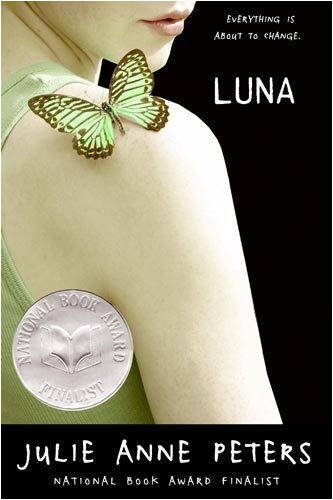
"Luna": Transformative novel for the modern teen.

Luna is the tale of a 17-year-old male who seems to have it all:  he's brilliant, handsome, responsible, smart with his money, techno-saavy...there's just one problem:  he's really a girl.  Liam O'Neill was born a male on the outside, but emotionally and cognitively, he's always known he was supposed to be a girl.  The novel, as told through the eyes of  his younger sister Regan, details the emotional struggles of both Liam (or "Luna") as he wavers on the precipice of his gender transformation, and Regan as the sole secret keeper and constant witness to Liam/Luna's transitioning to her new life as a female.

The story's conflicts are pretty straight-forward:  hiding a life-long secret from dysfuntional parental units, questioning socially-accepted gender roles and identities, coping with the the cruelty of high school peers, and struggling for acceptance from the community at large.  As one might predict, Liam's revelation doesn't go over so well on any of these fronts, leading him (and Regan) to moments of heart-wrenching despair, seemingly trapped in a world unlikely to ever accept Luna for who she really is.

At the same time, Regan struggles with the intense pressure of being her brother's secret-keeper and sole advocate, while still navigating and surviving her own high school hell of peer misconceptions, sexist teachers, and a budding romance that turns disastrous at every turn.  Add to that a brother who is about to burst forth from his cocoon of gender oppression and you've got a recipe for a teenage meltdown.  Which happens - eventually.

Frankly, I struggled to really like or connect with any of the novel's characters - I felt as though I never really got to know them intimately.  Even our narrator, Regan, is vague and secretive about herself - even with her audience.  Despite my frustration, I chalked it up to being accurate and effective writing from the teenage perspective, where nothing is certain and everything changes from moment to moment.  Nonetheless, it made me angry.  Especially when it seemed that Regan's choice to suffer endlessly and silently on behalf of her brother, sacrificing her own life for his, would never end.  However, as aforementioned, the meltdown did come and it was both justified and satisfying to finally see Regan completely go off on Luna for her selfish and self-centered behavior that has cost her so much of her own freedom. 

Regardless of my personal frustrations with the writing style, I give this book major kudos for broaching the topic of a transgender teenager.  Statistically, I don't know how common this situation is within the average high school, but I suspect that it is more common than I think.  Despite the specificity of Luna's struggle, the emotions and adversities both she and Regan face are still relevant and relatable.  Any teenage reader will be able to make a connection to the emotions of the two main characters:  the pain of being misunderstood and ostracized for being different; the pressures from parents and teachers to be something they're not; the struggle between siblings to find identity and independence; the sense of utter isolation and despair a young person feels when the world seems to turn against them at every turn.

While I would not necessarily use this novel as an anchor for a unit, I would absolutely have it in my personal classroom library.  Furthermore, this novel inspires me to create a unit with a teenage slant on "Human Issues" or "Human Rights" topics where the students have Lit Circles, making this novel one of the options the students could choose to read and focus their topic upon.  I am guessing I would need to have Parent Consent forms signed for this unit, as it would revolve around more "controversial" topics such as LBGT issues, bullying, eating disorders, cutting/self-mutilation, teenage pregnancy, rape, family problems, gang violence - to name just a few topics our children face today.

I discovered that Julie Anne Peters has quite an impressive collection of YA novels, many involving LGBT themes, but all involving coming-of-age struggles.  Additionally, in doing my research for our Literacy Study Group, I came across related other YA titles that I would be interested in reading and possibly incorporating into the aforementioned unit, or carrying in my personal classroom library.  I have included a short list, both as reference for myself and as suggestions for my fellow classmates to get some ideas for our future classrooms:

By the Time You Read This, I'll Be Dead - JAP (Bullycide)
Define "Normal" - JAP (Teen Tolerance) 
Rules - Cynthia Lord (Autism)
No More Dead Dogs - Gordon Korman (Student vs. Teacher)
Yummy:  The Last Days of a Southside Shorty - G. Neri (Gang Violence)
Scars - Cheryl Rainfield (Cutting, Sexual Assault)
Tamara's Child - B.K. Mayo (Teen Mother, Family Drama)


This short list just barely scratches the surface of relevant YA novels that run the gamut of relevant teen issues and topics of debate.  Although the hero/heroine of Luna is a more marginalized student, the themes of struggle and acceptance are universal and well-worth talking about in our classrooms.

Friday, June 7, 2013

First "Breath" of YA Lit Class

Breath - Donna Jo Napoli
When I first laid eyes on our reading list for our Adolescent Lit class, I was immediately drawn to the "Historical Fiction" category, and after scouring multiple synopses on Amazon, I couldn't wait to get my hands on this book and make it my official first read of the class!

Medieval Europe + Plagues + Mystery (and maybe a little bit of Magic) = Awesome.

It did not disappoint, and my inner history nerd was sated.

More than that, I found myself delaying the completion of the book, as I was not yet ready to leave the strange, enchanting and dark world into which I had been so easily drawn.

But let me back up a little before I go all histo-lit-geek on you
(Lib of Alexandria 4-eva, son!)


Brief Synopsis:
The protagonist of the story is Salz, a young boy in medieval Hameln.  He lives outside of town with his father and brothers, as well as his grandmother.  Salz is a special boy - he lives with a mysterious illness that sends him into violent and uncontrollable coughing fits, forcing him to stand on his hands for long periods of time in order to subdue them.

The familial relationships between Salz and both his brothers and father range from indifference to deep-seated hatred (one brother holds him responsible for their mother's death).  Due to his illness, he's doesn't have much to bring to the table in the way of manual labor, leading to further resentment/indifference.

Salz and his grandmother, however, have a very close relationship and spend their days basically inseparable, scouring the land for herbs and other necessary ingredients, making potions with said ingredients, and participating in a Christian Coven (I had no idea there were such things).  His grandmother and her Coven are actually very well-respected within their community and there is no fear or superstition associated with the group.

Until bad things start to happen to the folks in Hameln...

Suddenly people are afflicted by a mysterious malady that seems to make them go mad.  Throw in some homemade beer, a rapidly-growing body count and a sudden rat infestation and you've got the perfect storm for a good old fashioned witch hunt...

...But it's a Christian Coven!  Doesn't that count for something?!?
Seriously?  We're the only nasty thing you've touched today?!?


I'll avoid spoilers here, but I was very impressed with how the author wove together historical places and settings with fictional characters as well as a classic fairy tale (the story evolves into a dark depiction of the "Pied Piper" tale).

The brief Afterword was also a nice touch, providing modern revelations on the story's key mysteries.

Napoli easily drew me in with her simple but engaging prose and descriptions that proved visceral and effective in creating an entire world that envelopes Salz - and the reader.

Salz is an unusual boy, but immediately likeable and relatable - particularly with young adults.

His family dynamics of dealing with resentful siblings and a dismissive father are certainly nothing our modern teens can't empathize with.  His relationship with his grandmother provides a nice counterbalance to the dynamic and imbues Salz's life with a source of love and a sense of belonging.  

Salz also faces some common coming-of-age scenarios:  becoming a sort of "foster brother" to a young girl and gaining a sense of adult responsibility; facing death on a personal level; feeling conflicted between his faith in the coven and the distress he feels when they sacrifice a cow in a less-than-humane manner; and experiencing the first stirrings of his budding sexuality.


While I personally loved the book because it appealed to my personal tastes, I have to keep perspective and put my "teacher" hat on now:

Do I think that a lot of students would enjoy this book?  Yes, I do.

Do I think that I could use it as the anchor for an entire unit?  No, probably not.

Could I use this book at all in my instruction?  Yeah, I think so.

It would be a very nice companion piece for a unit on creative writing.  It would also be fantastic as a crossover tool if I were in a team teacher setting and we were teamed up with history!

Regardless, it would definitely go in my personal classroom library.

While the language is more complex and some of the situations fairly graphic and emotional, I think the book holds a wide appeal that can be appreciated across the board with its fast-paced plot, engrossing mysteries, likeable protagonist and rich storytelling.  And a plague, which always makes things interesting.

Thursday, June 6, 2013

The Geeks Shall Inherit the Earth: Kelly K's reaction


I honestly have to say that this book underwhelmed me, disappointed me, and puzzled me a bit.

Starting out, I was excited by the title because it is actually a phrase I have used before in reference to the book's topic and it reinforced my own beliefs that the students who are considered "weird" or "unpopular" in middle and high school or often the ones who become most successful and dynamic in their adult lives.  Not to mention that they are usually far more interesting and insightful than students who conform to peer pressure or the  "populars" who often set the norms for their peers and only stick to their cliques while cruelly judging everyone else.  The bottom line was that I had a good feeling that this book was going to resonate with me and I looked forward to the insight into the interpersonal relationships and social dynamics of humans - and more specifically - teenagers.

However, at about the half-way point of reading this book, I was really struggling to stay engaged, which surprised me, considering my interest in the topic.  However, I was not getting many "aha" moments out of it.  The specific subjects that the author writes about were fairly diverse in nature, including a "popular bitch," "loner," "nerd," "gamer," "new girl," "band geek" and "weird girl." These generic labels for non-popular students covers a lot of ground in defining the different "types" of kids that fall within their labels and each story gives a great deal of personal insight into the fear, anxiety, loneliness, frustration and struggles encountered by the non-popular students (who actually seem to make up the majority of the student population).  Even more fascinating was the twist on the "weird girl" story, where it turns out to be a teacher who also happens to be an out lesbian.  As a future teacher, the "teacher clique" horror stories were particularly surprising and terrifying.  

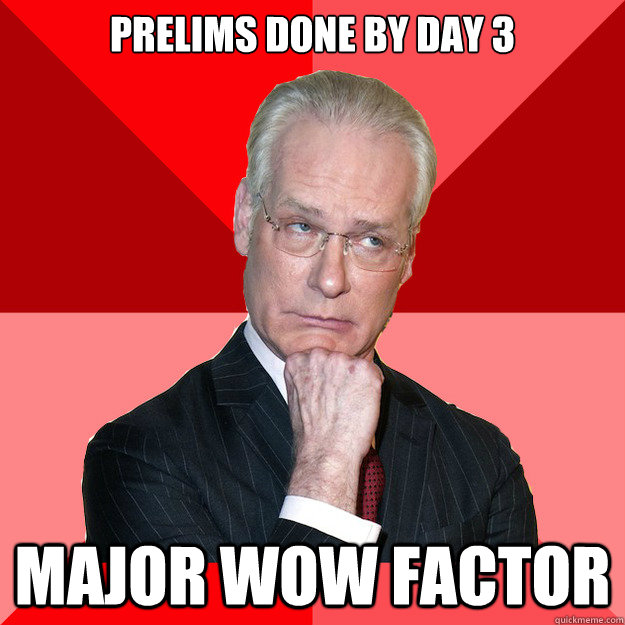
However, this book meandered on and on, weaving back and forth between the different stories and intermingling factual interludes to (sort of) tie it all together.  In my opinion, the book could have easily shaved off half of its 400 pages and still effectively conveyed the author's main points.  And those main points, I guess, have something to do with "quirk theory," another  meandering phrase that popped up now and again in an attempt to tie the different stories together.  I feel like I simultaneously already understood this concept while at the same time never fully feeling that the author herself ever clearly defined her own theory in her own words.  Again, lacking on the "a-has" here.  Or the "Wow" factor, as Tim Gunn puts it.  

Once again, I feel that the format the author chose for the book undermined the impact of her theory and her stories.  It became tedious to hop from one subject's story to the next, trying to keep everyone's individual story straight and a lot of it feeling repetitious and generic.  Significant parallels and connections within the circle of characters might have been more clearly articulated with a different writing approach.  For example, just allotting a chapter for each individual story would have been sufficient and easier to follow, not to mention making it easier to swallow her spoonfuls of "quirk theory" goodness that she sprinkles here and there over the 400 pages.  

Yes, I am getting a little snarky now.  

Maybe it's because I had high expectations for this book; maybe it's because I'm jealous that the author got to go on Oprah; or maybe it's just because this all seems very obvious to me.

I think I would have preferred a more straight-forward message, perhaps more effectively conveyed through a Youtube video or website, rather than a lengthy novel with drawn-out stories and pseudo-scientific theories.  In fact, they already have those things!  I think that Dan Savage's "It Gets Better" campaign succinctly states what this author is trying to get across in this novel.  It's just that, instead of 400 pages, he does it in under 4 minutes, which is also appealing to the attention spans of today's youth.

Newlyweds featured on itgetsbetter.org


 And they're from Madison! 

Despite the tone of this blog so far, I am actually glad that I read this book because the topic still fascinates me and there were still plenty of insightful moments throughout each subject's journey within the book.  While I don't see myself assigning or teaching this book to any of my future classes, I would definitely have it in my classroom library for independent reading.  I think it still has valuable insight, and it might actually be very impactful and helpful to other teens who may be going through the same struggles that the kids in the book experience. 

While I myself might not find the information groundbreaking, if it helps just one student, I'm all for it.  Also, it is never a waste of time to invest in learning more about your profession and those that you serve.  In this case, that would be teenagers, and so this book can be used as a point of reference to help keep me grounded in where my students are at emotionally and mentally.  I also think there are probably plenty of related titles, so if nothing else, this book serves as a springboard into exploration of a topic that will (unfortunately) always be relevant in our society.

The book does end on high notes for all of the subjects, and while all of their problems may not be resolved and their futures not 100% clear, it gives the reader encouragement that you are never stuck in high school hell forever.  It does, indeed, get better.

**Now I'm going to go read Kelly B's blog, as I'm curious to get her thoughts.  And I saw an image of The Breakfast Club, so it has to be good!**